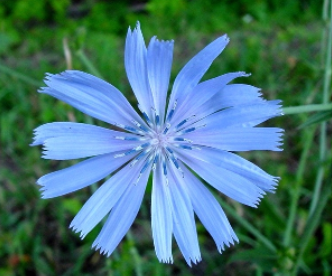
Chicory
Cichorium intybus
Plant Family: Asteraceae
Other common names: Succory, Blue-sailors, Coffeeweed
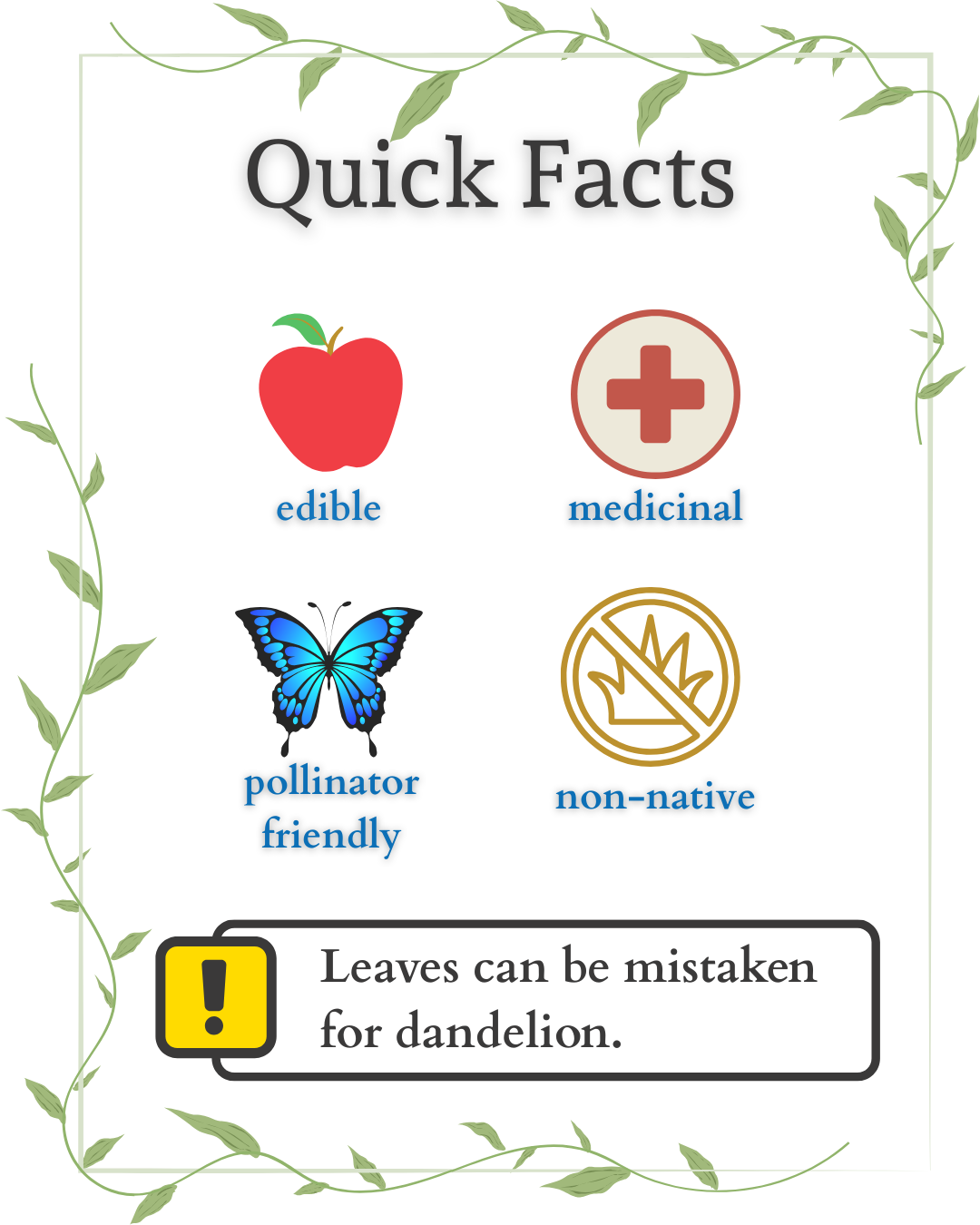
*native/non-native is specific to the Great Lakes Region of the United States
Chicory is tall, scraggly, and has woody stems that stab your bare feet if you’re not looking where you step. He sports many bright blue flowers and dark green leaves above ground, and taproots that penetrate the ground below. This is one herb that has been popular as a coffee alternative for a while now; however, this plant does not contain any caffeine. The root does provide nutrition and digestive support, though, and has an earthy flavor that can compliment a coffee blend really well.
Medicinal Virtues & Edible Parts
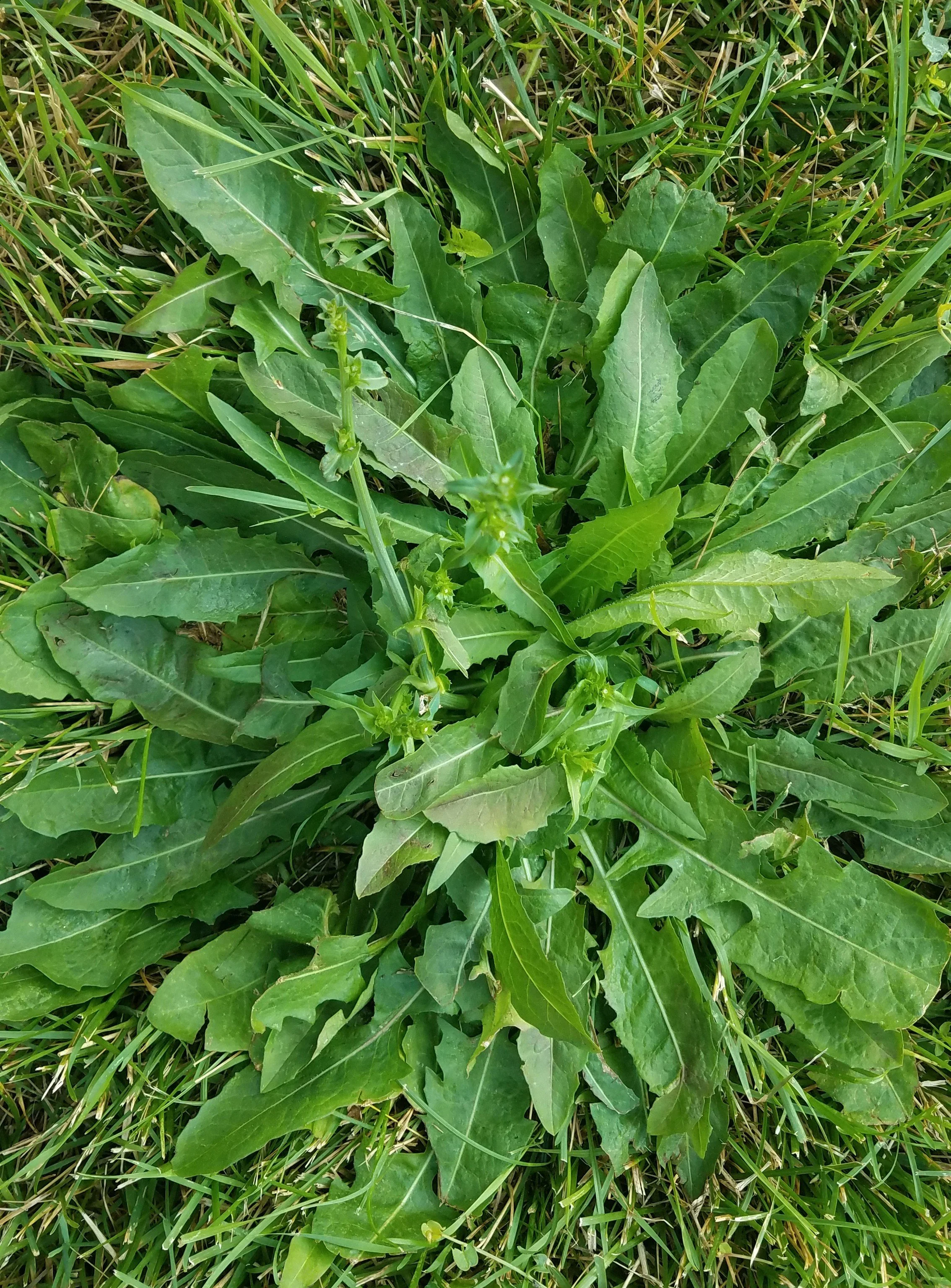
LEAVES
Energetics — stimulating
Flavors — bitter
Organ/System Affinities — digestive
Actions — nutritive
Key Identifying Factors
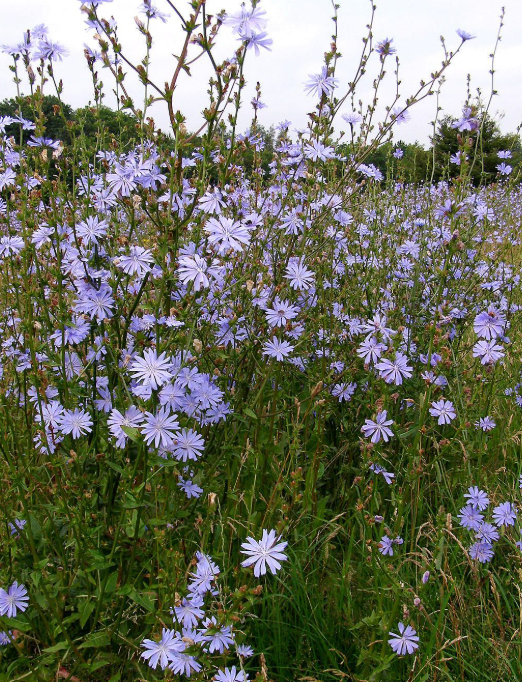
Flowers alternately grow on stems that are attached to the main stem and sprawl out in a chaotic, yet controlled manner.
Ally for — food; digestive support
ROOTS
Energetics — moistening, stimulating
Flavors — slightly sweet, bitter, earthy
Organ/System Affinities — digestive, liver, skin, urinary
Actions — nutritive, prebiotic
Ally for — food (coffee additive); digestive support; heal the skin from within the body; liver tonic; gut health
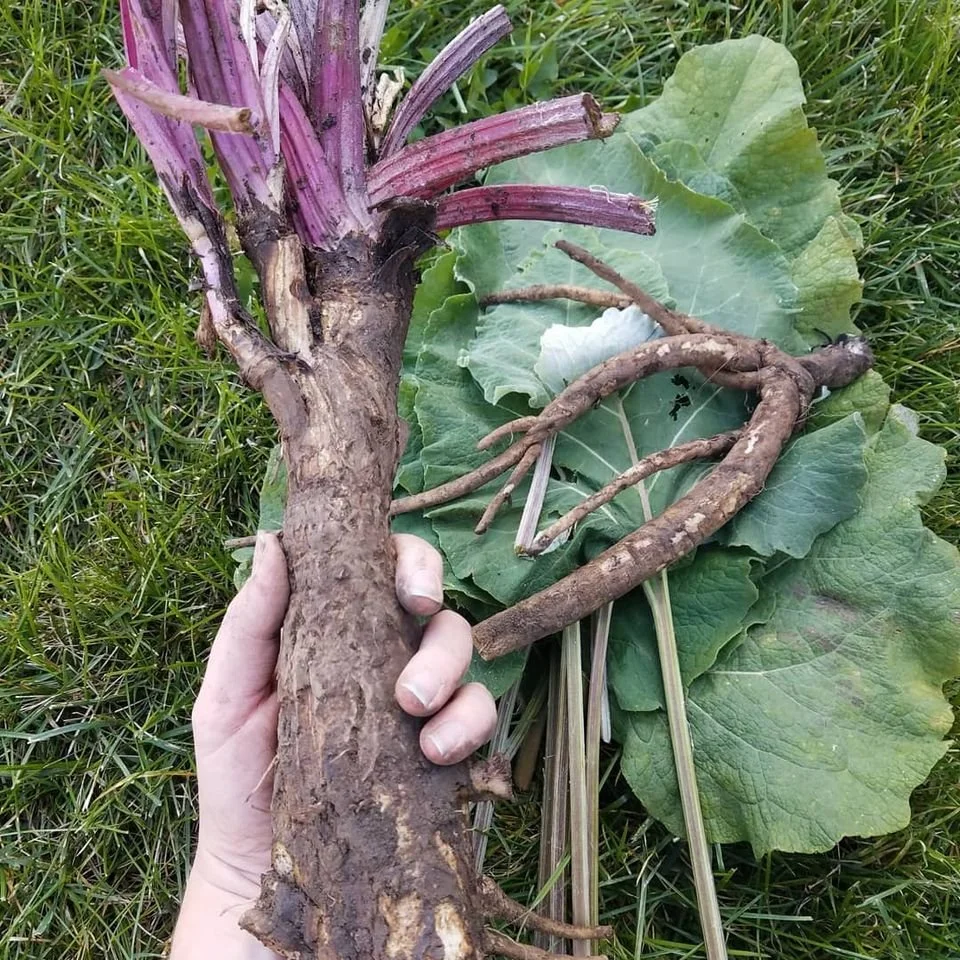
*pictured above is not chicory root, but is burdock root - placeholder until I can get more photos of chicory
“Chicory is a perennial herb with a taproot resembling that of the dandelion. It grows between 2 and 3 feet tall, and it is easily recognized by its unkempt appearance and lovely blue flowers. Its leaves are rather sparse, and its branches are set off angularly from the main stem, which gives the plant a rather scraggly look. The bases of the leaves clasp the stems. The leaves at the plant’s base are large and hairy, and somewhat resemble those of the dandelion…” —Weiss and Weiss, Growing & Using the Healing Herbs
Blue flowers are arranged in a capitulate inflorescence, where numberous small florets join together in a single flower head.

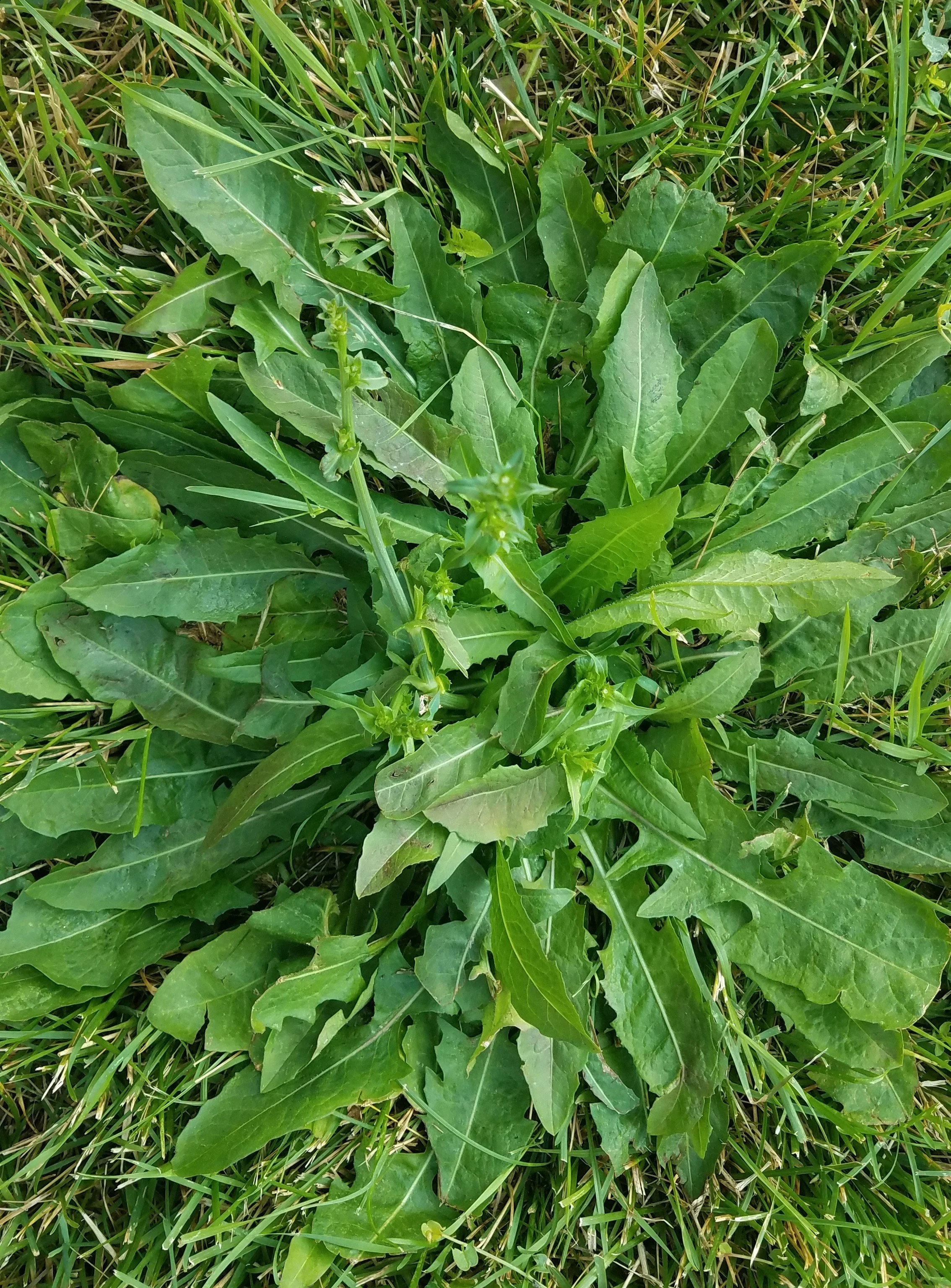
The leaves form a dense basal rosette when young, and then leaves also grow alternately on the stems as the plant gets taller. The leaf margins vary widely, but are mostly oblong and lobed.
Toxic Lookalikes
Although there are no known toxic lookalikes, proper identification is still necessary to ensure that the intended medicine is being administered/food is being consumed.
Compare Chicory to Dandelion (Taraxacum officinale), Prickly Lettuce (Lactuca serriola), and Sow Thistle (Sonchus oleraceus) — to name only a few. Pay attention to the differences in flower heads, leaf structure, and seed heads.
When and How to Harvest
Chicory is found in open fields and back yards and roadside ditches, much like Dandelion or Burdock. Harvest the young leaves in Spring by plucking by hand or using garden shears. The leaves are edible all season long, but the older they are, they tougher and more bitter they become. Dig up the roots in Summer through Autumn, which usually requires a sturdy shovel or hand trowel. Be sure to dig a few inches away from the center of the plant so you avoid cutting the root by accident.
Precautions
All parts are generally regarded as safe (GRAS), but folks who are allergic to plants in the Asteraceae family should use with caution.
Other Resources
Because the limited information above came from personal experience of one person, it is highly recommended that you continue learning from other trusted sources. Here are a few places to start!
Books
The Earthwise Herbal: A Complete Guide to Old World Medicinal Plants by Matthew Wood
Midwest Foraging: 115 wild and flavorful edibles from burdock to wild peach by Lisa M. Rose
Magic and Medicine of Plants by Reader’s Digest
American Herbal Products Association’s Botanical Safety Handbook
Encyclopedia of Herbal Medicine: 550 herbs and remedies for common ailments by Andrew Chevallier, FNIMH
Growing & Using Healing Herbs by Gaea and Shandor Weiss
The Rodale Herb Book: How to Use, Grow, and Buy Nature’s Mircale Plants, an Organic Gardening and Farming Book
Websites & Videos
These statements and claims have not been evaluated by the Food and Drug Administration.
This information is not intended to diagnose, treat, cure, or prevent any disease. For educational purposes only.