Comfrey
Symphytum officinale
Plant Family: Boraginaceae
Other common names: Knitbone, Knitback, Healing-herb, Ass-ear, Bruisewort
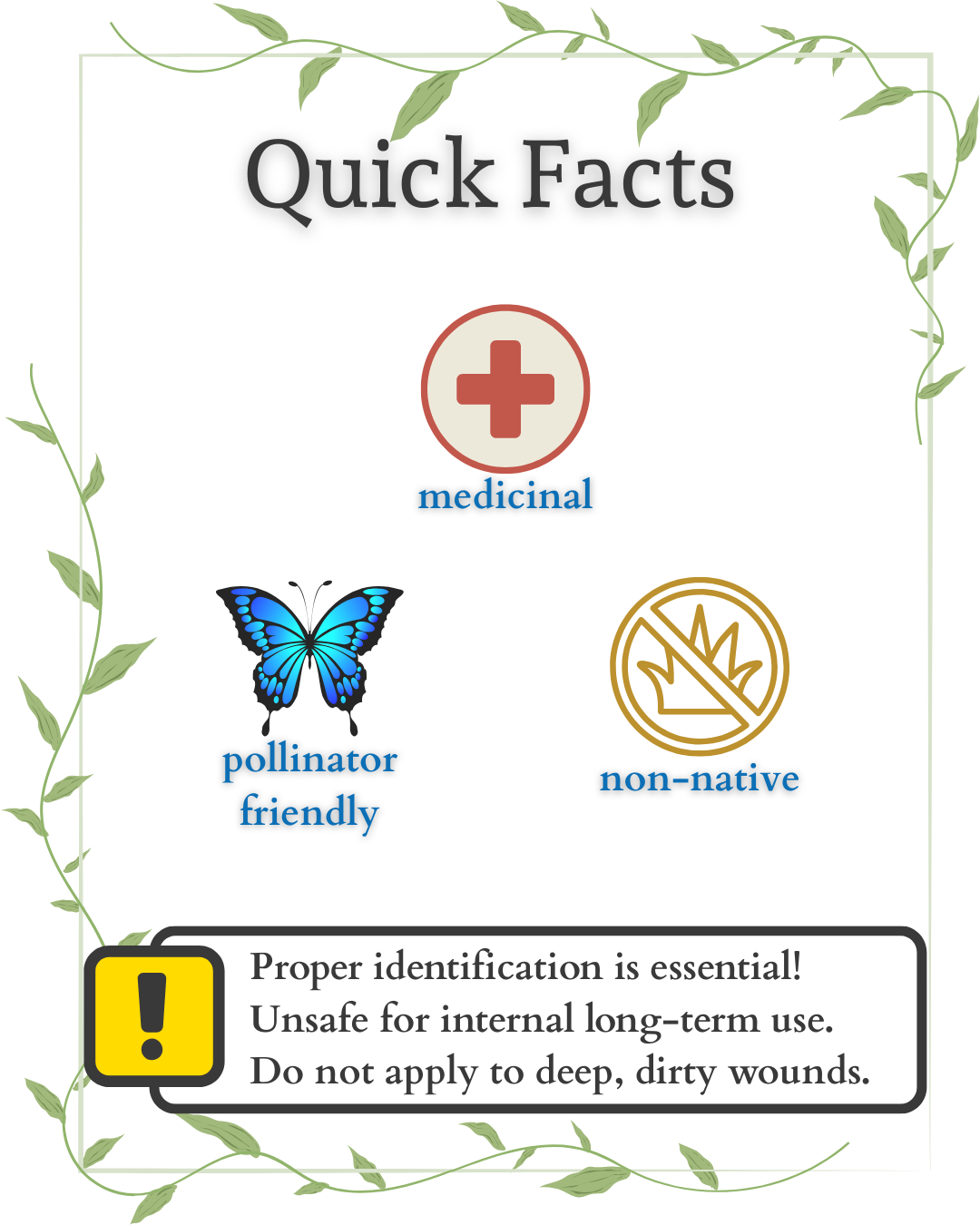
*native/non-native is specific to the Great Lakes Region of the United States
“Few herbs have had as many extravagant claims made for them as has comfrey. Known for centuries for powerful abilities as a healer, comfrey was often granted purely miraculous ones as well. Culpepper claimed that comfrey root ‘is said to be so powerful to consolidate and knit together, that if they be boiled with dissevered pieces of flesh in a pot, it will join them together.’” — The Rodale Herb Book, 1975
Medicinal Virtues & Edible Parts
FLOWERS, LEAVES, & ROOTS
Energetics — cold; moist
Flavors — satly; earthy; slightly astringent; slightly bitter
Organ/System Affinities — tissues; bones
Actions — astringent; demulcent; stimulating; vulnerary; inflammation-modulating
Ally for — (all can apply to pets as well) healing topical wounds; healing broken bones; joint issues; arthritis; bruises; breast inflammation; digestive inflammation; sprains; tendonitis; fingal skin infections
Key Identifying Factors
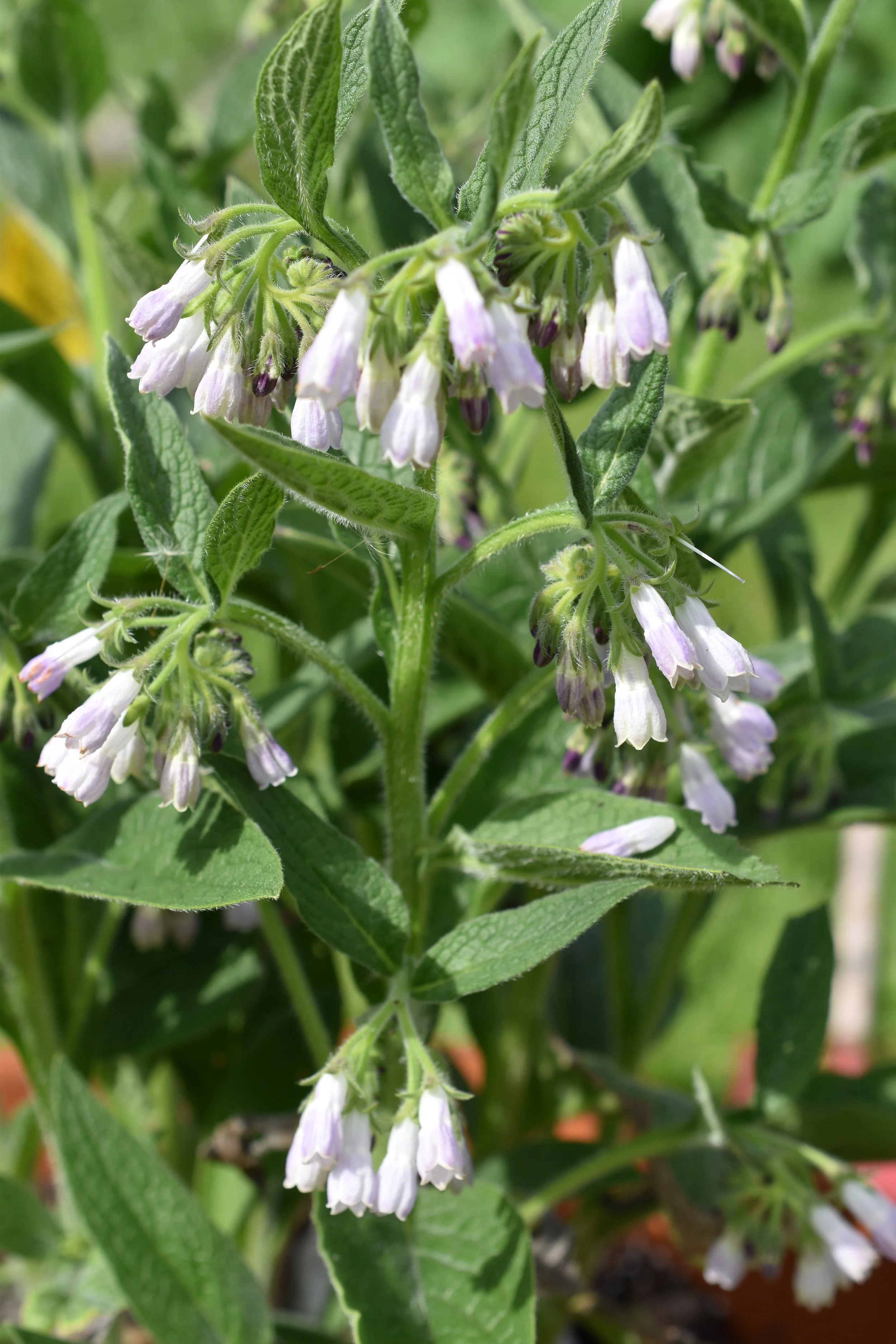
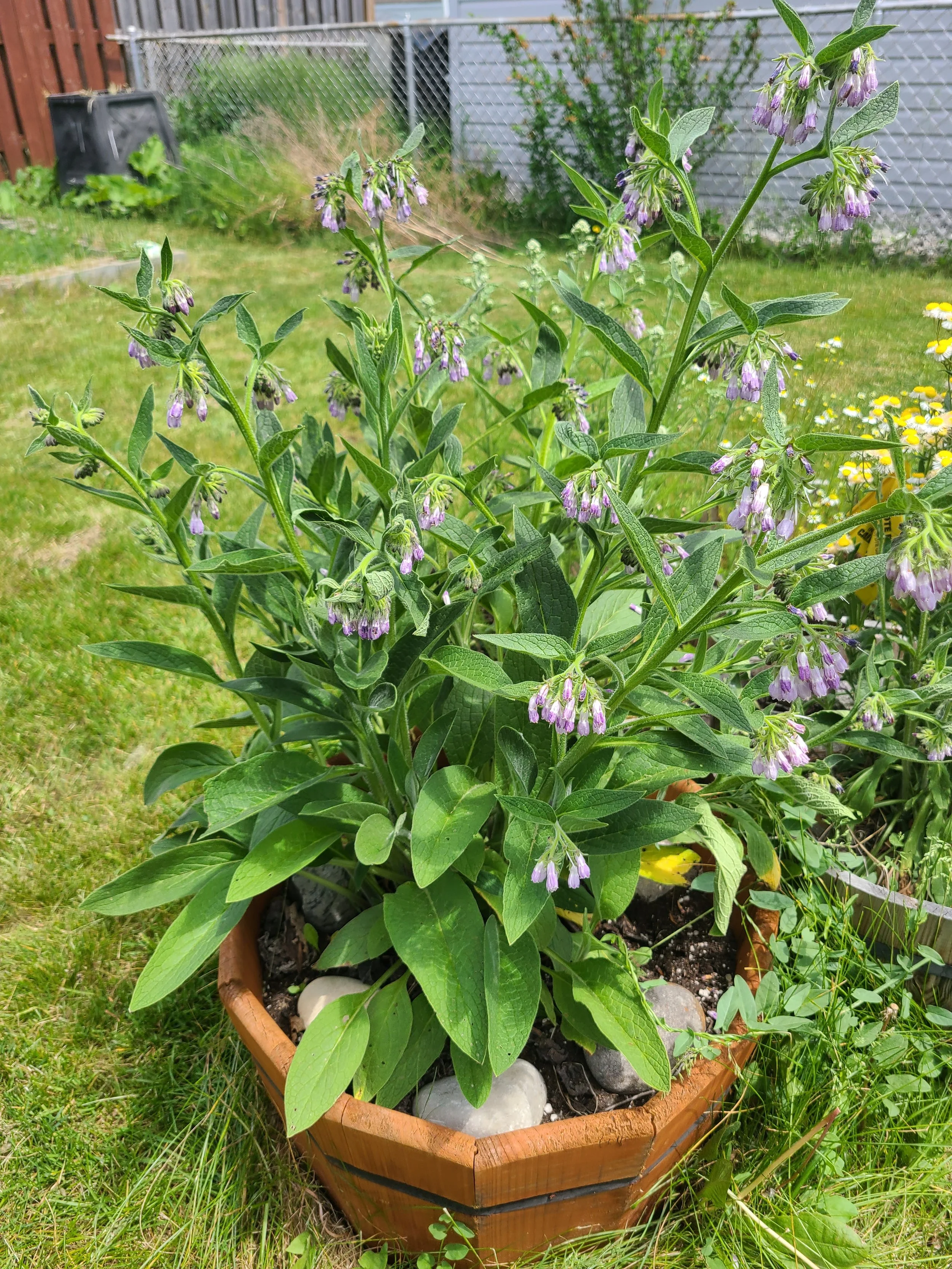
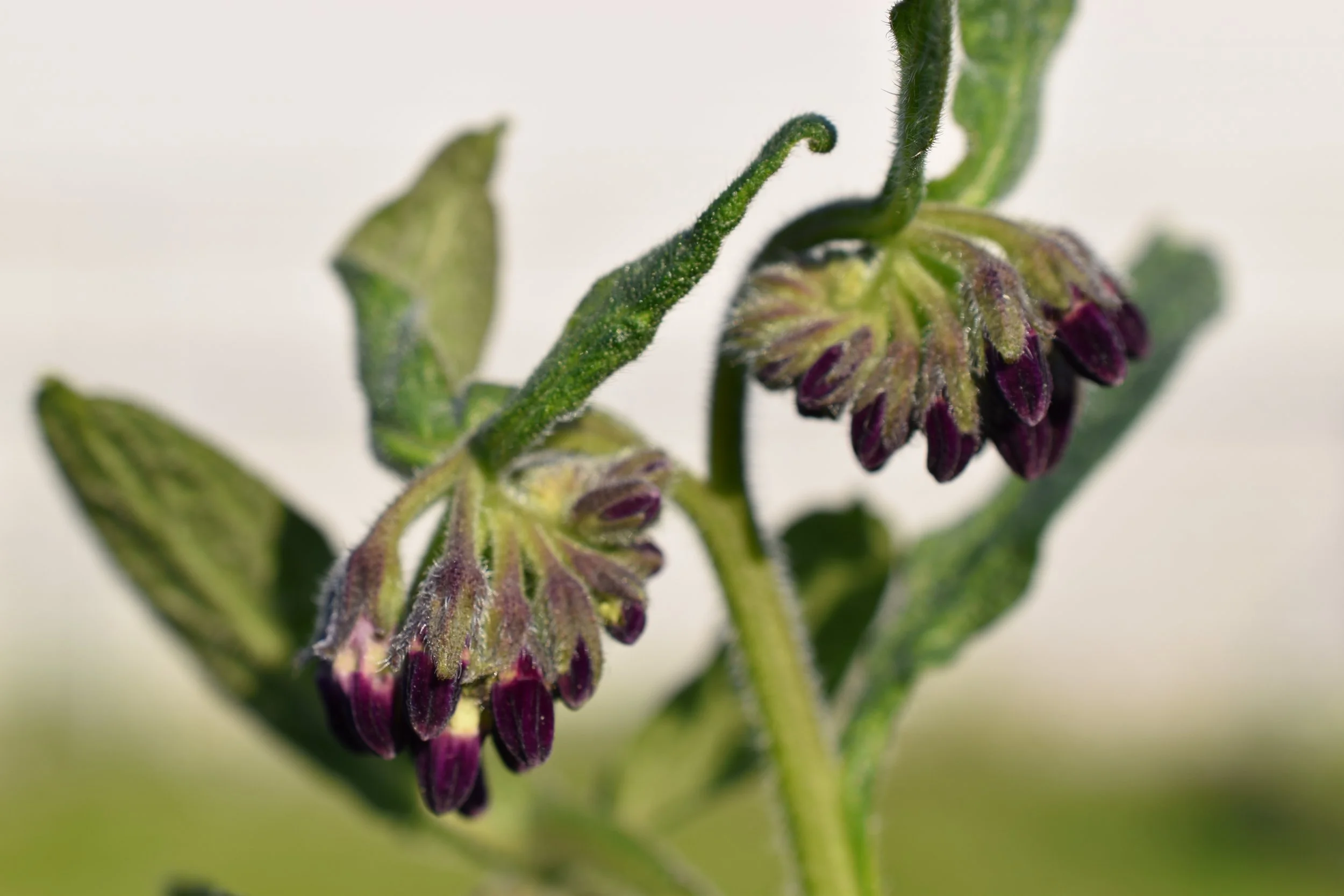
When allowed to grow to his full size, Comfrey is an eye-catching plant who demands presence in the landscape. His grandeur lends well to being a focal point in an herb garden, but is also noticeable from afar, which draw people’s curiosity about who he is. Standing at a few feet high and spanning just as wide with gorgeours purple flowers sprinkled all over, Comfrey’s welcoming appearance can be balanced out by his prickly feel from the strong hairs that can get stuck in the forager’s skin.
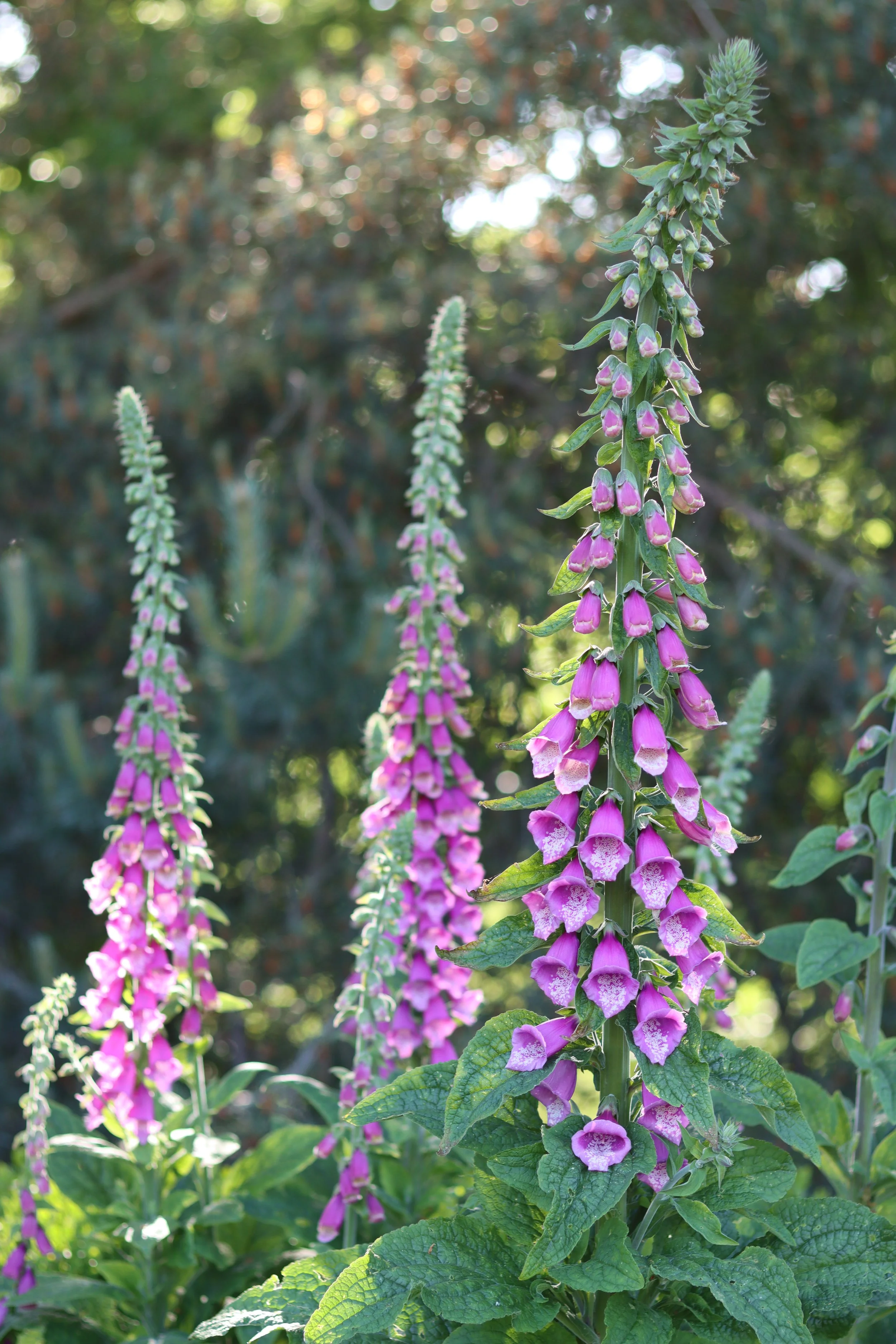
<—COMPARE—>
Comfrey
Foxglove
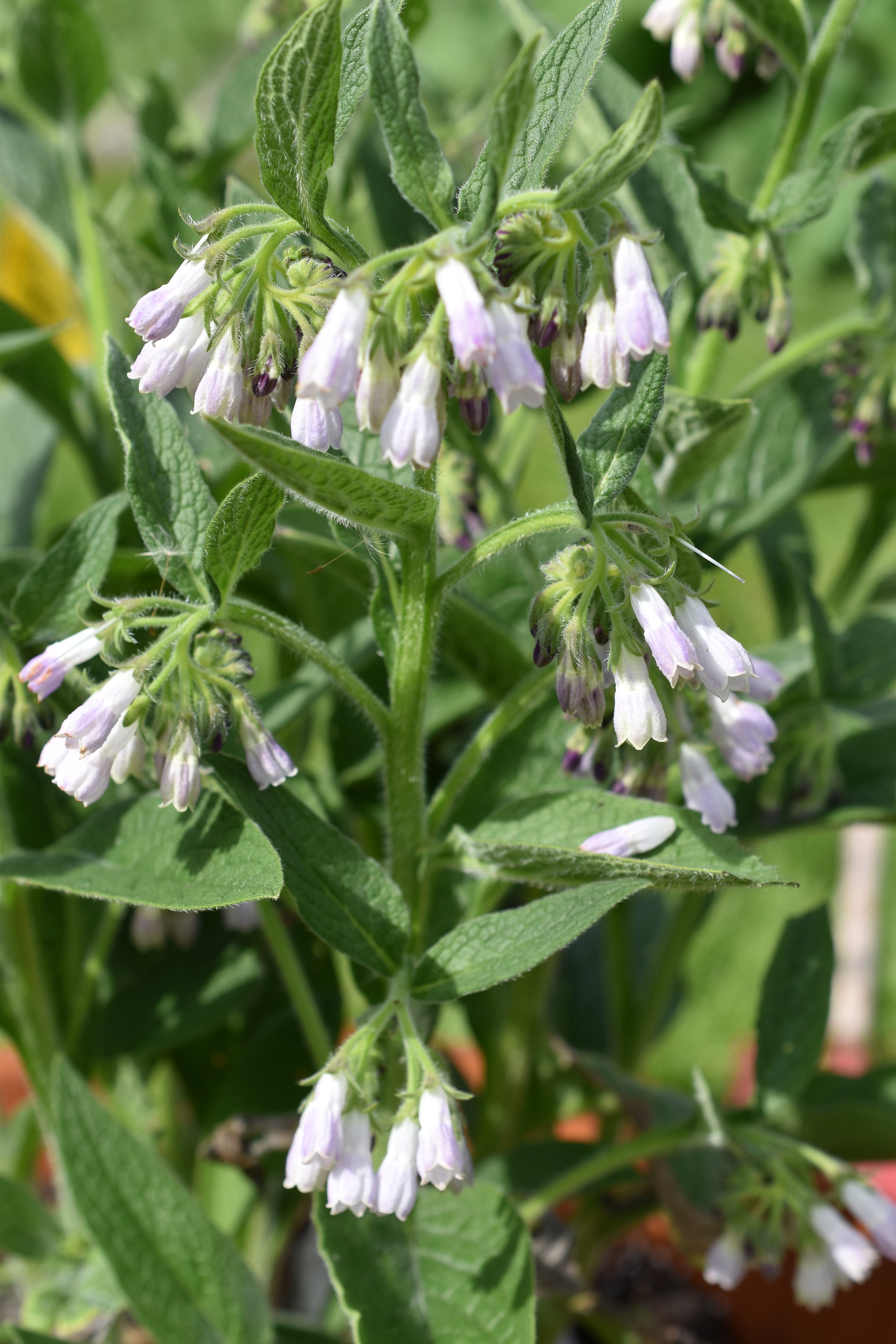
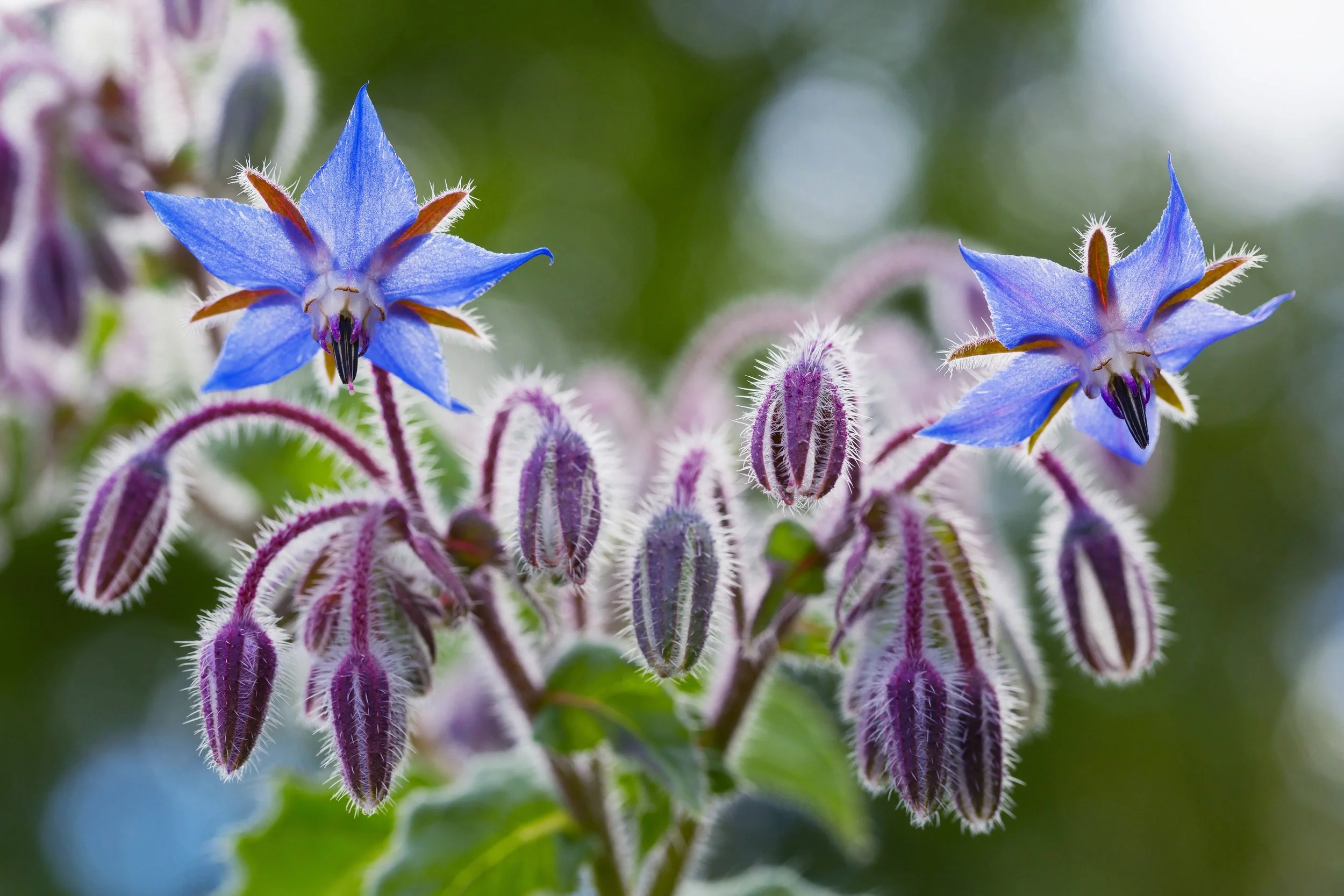
<—COMPARE—>
Comfrey
Borage
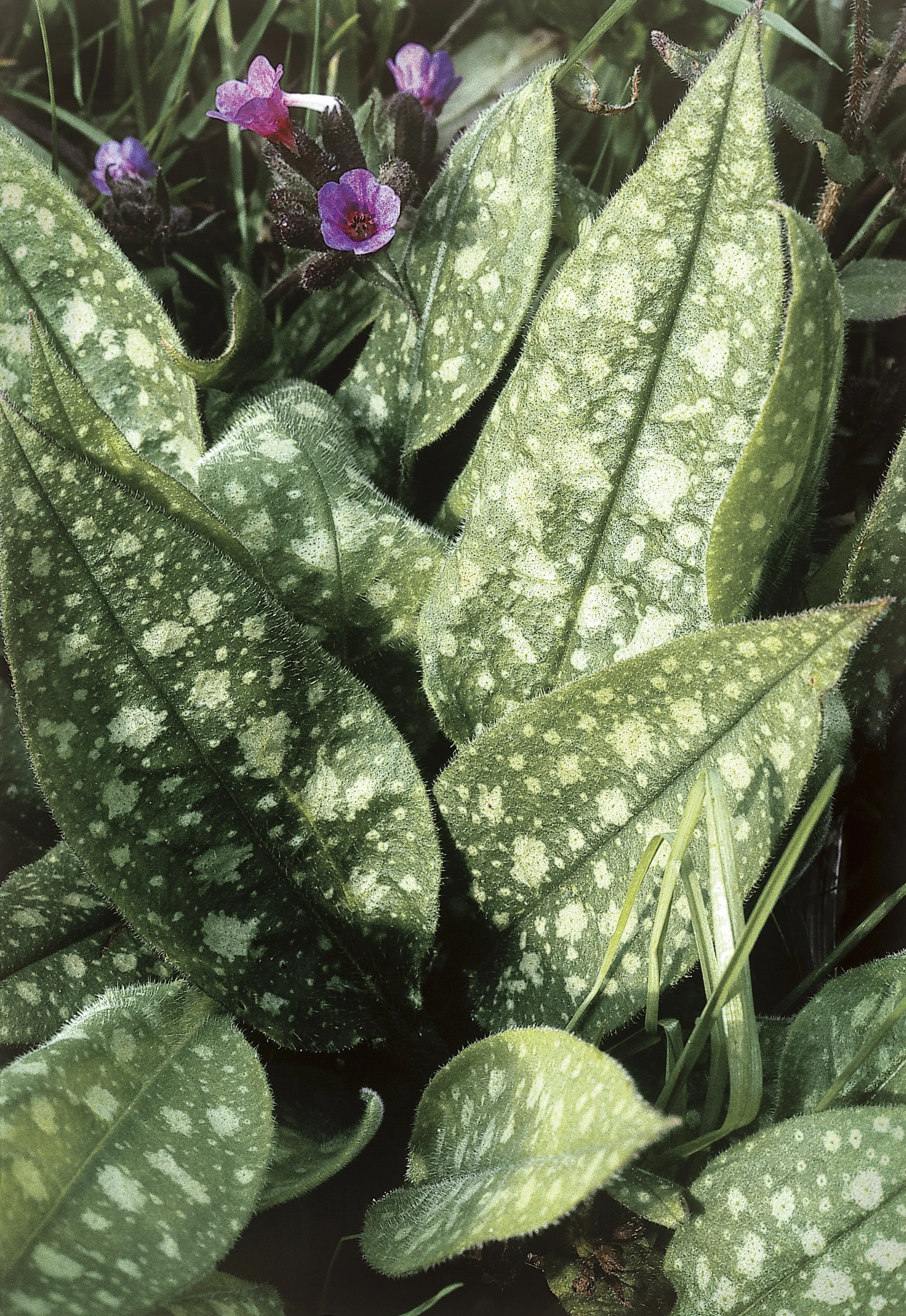
<—COMPARE—>
Comfrey
Lungwort
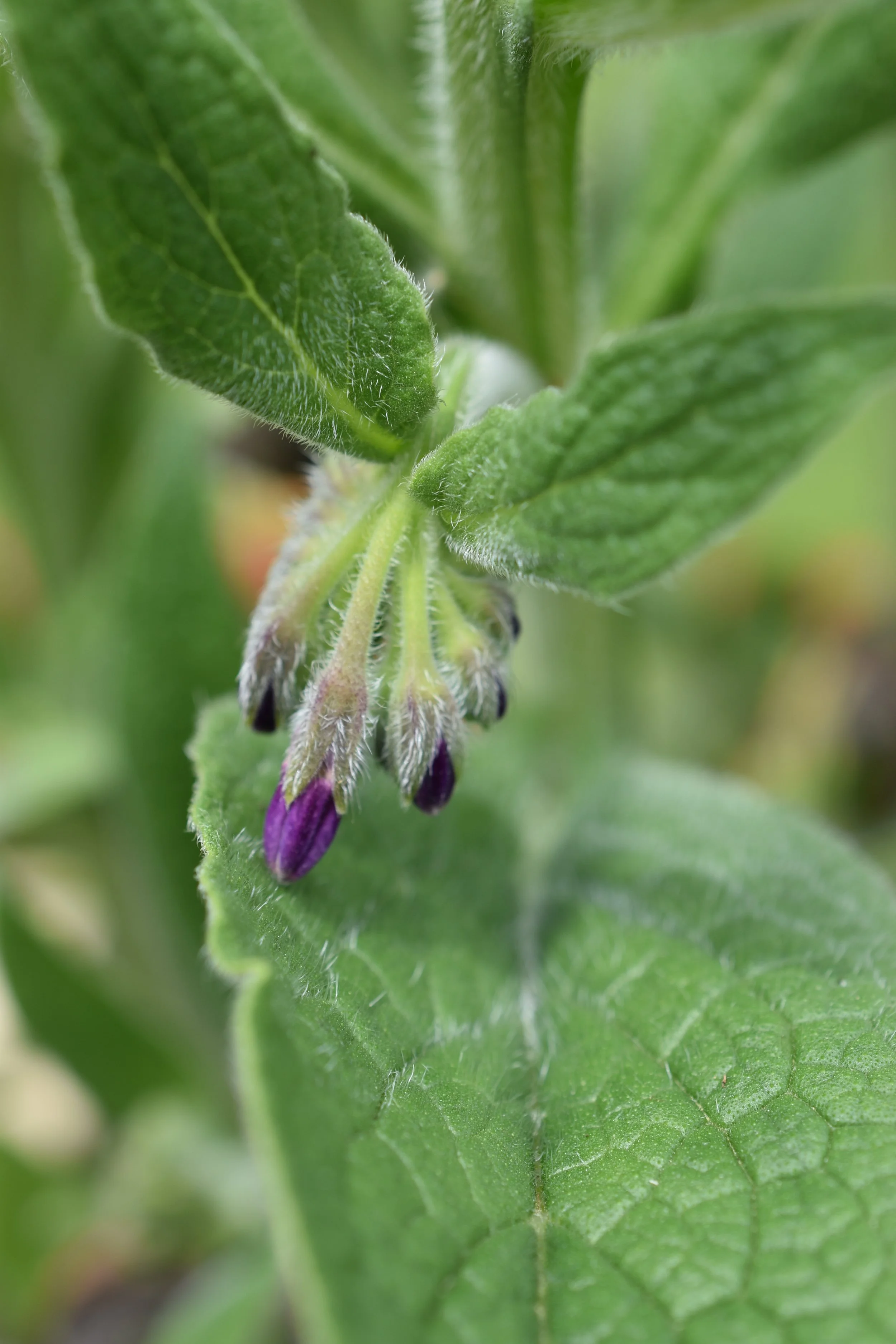
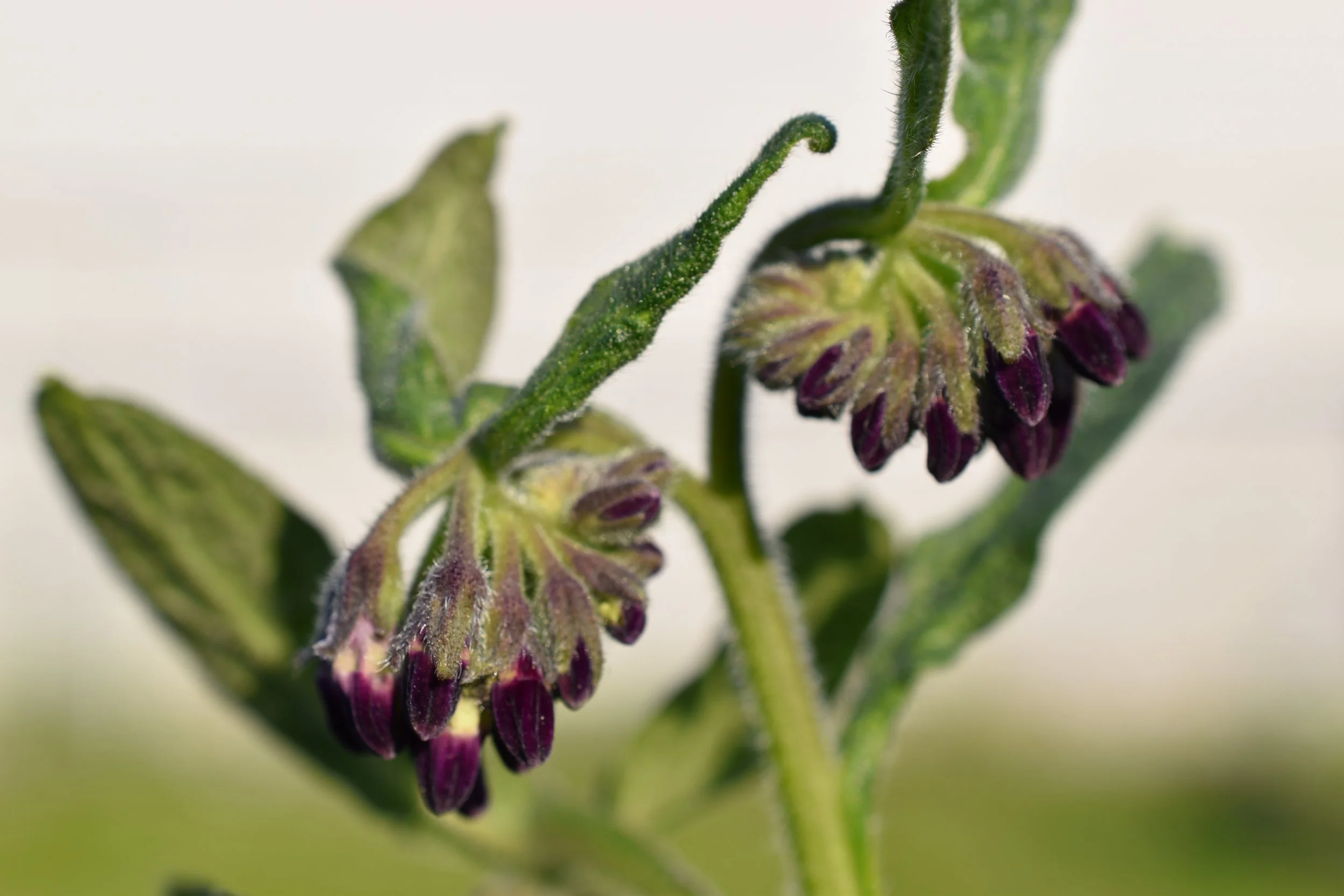
The flowers begin as tightly closed, dark purple, fuzzy packages that lighten in color as they age. They almost look like they are made of velvet, and they dangle in clusters from one point on the stem.
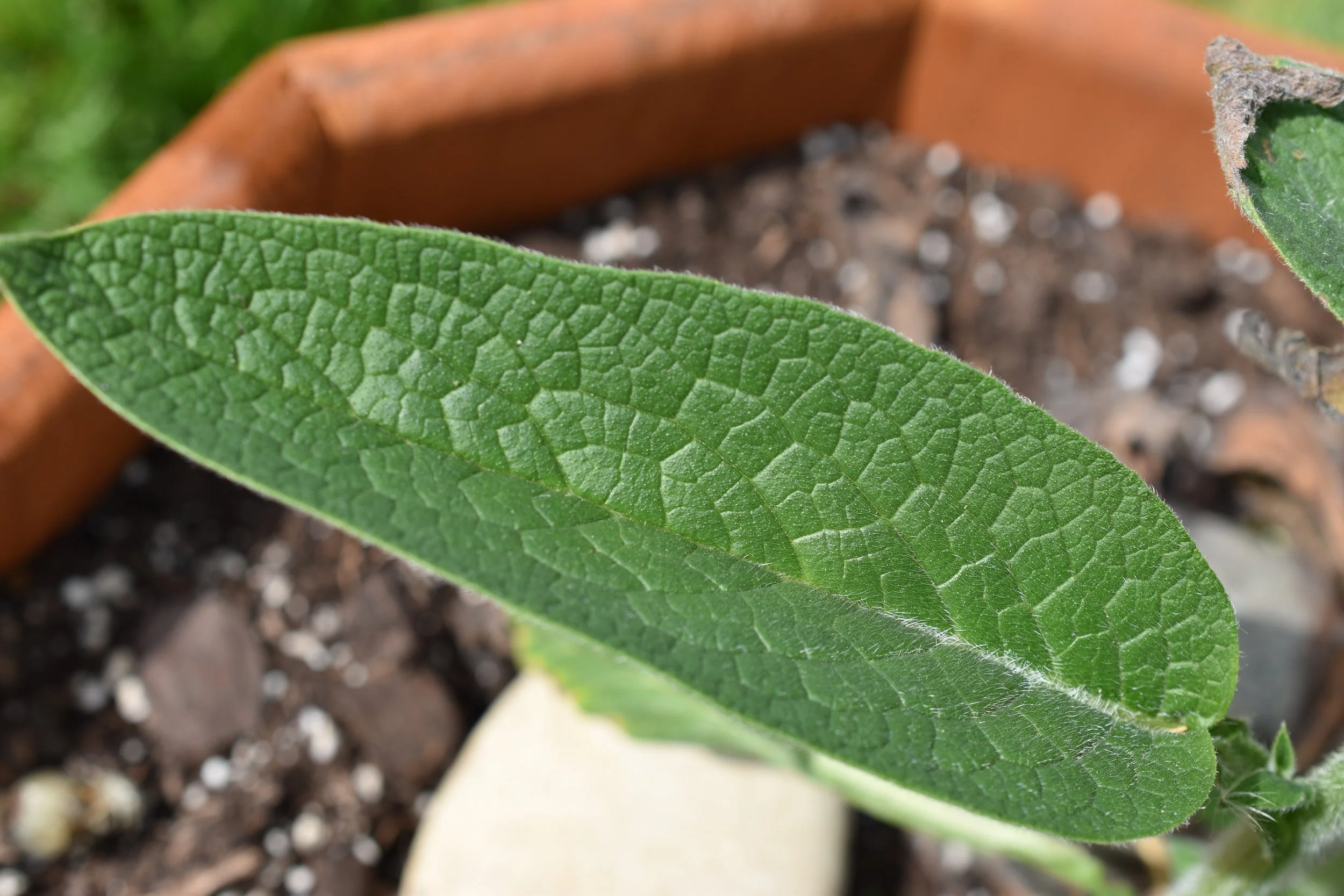
The basal leaves form a loose rosette at the ground and sprawl out as the plant grows larger. The shape of each leaf is simple and elliptic in shape, with wavy-to-smooth margins.
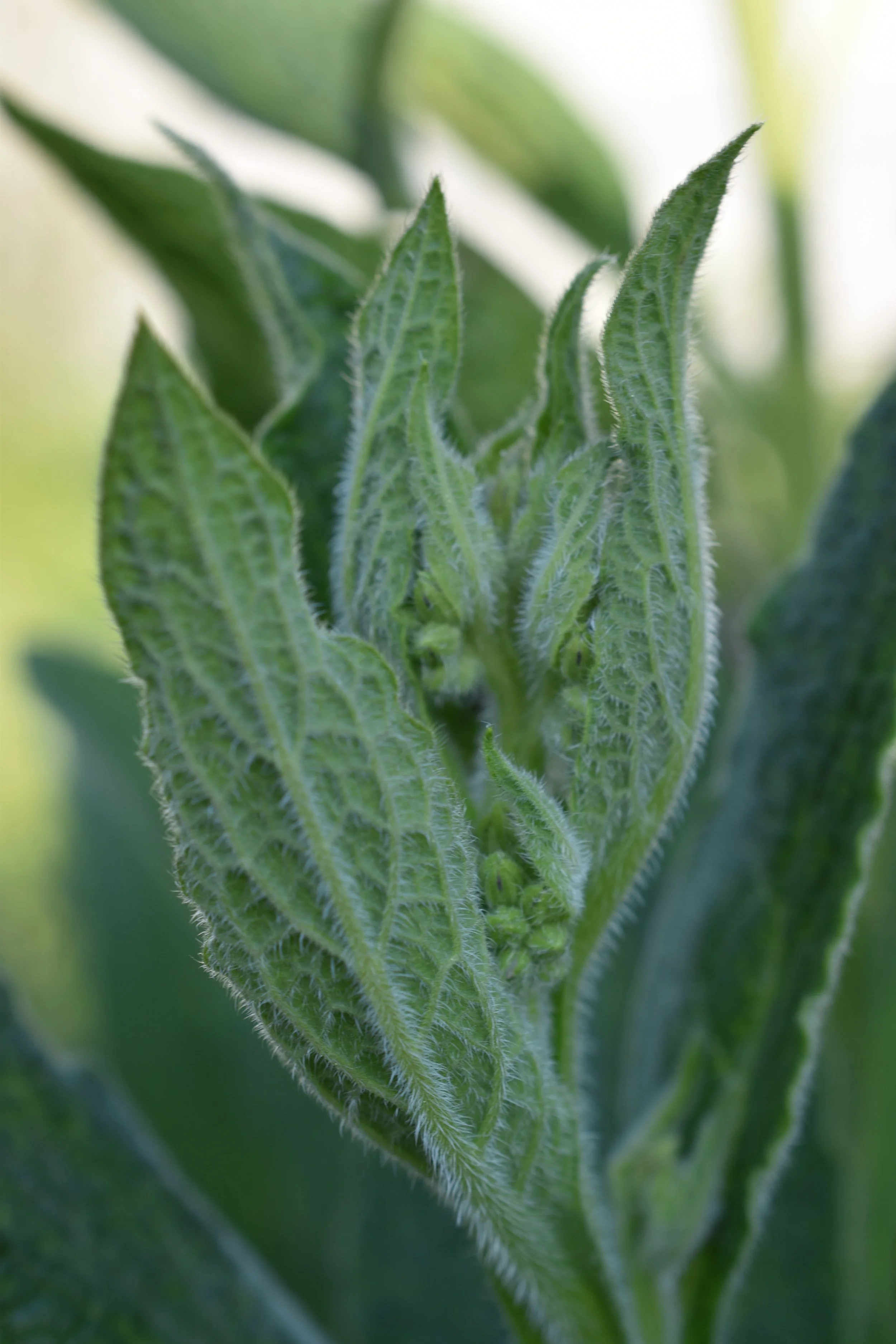
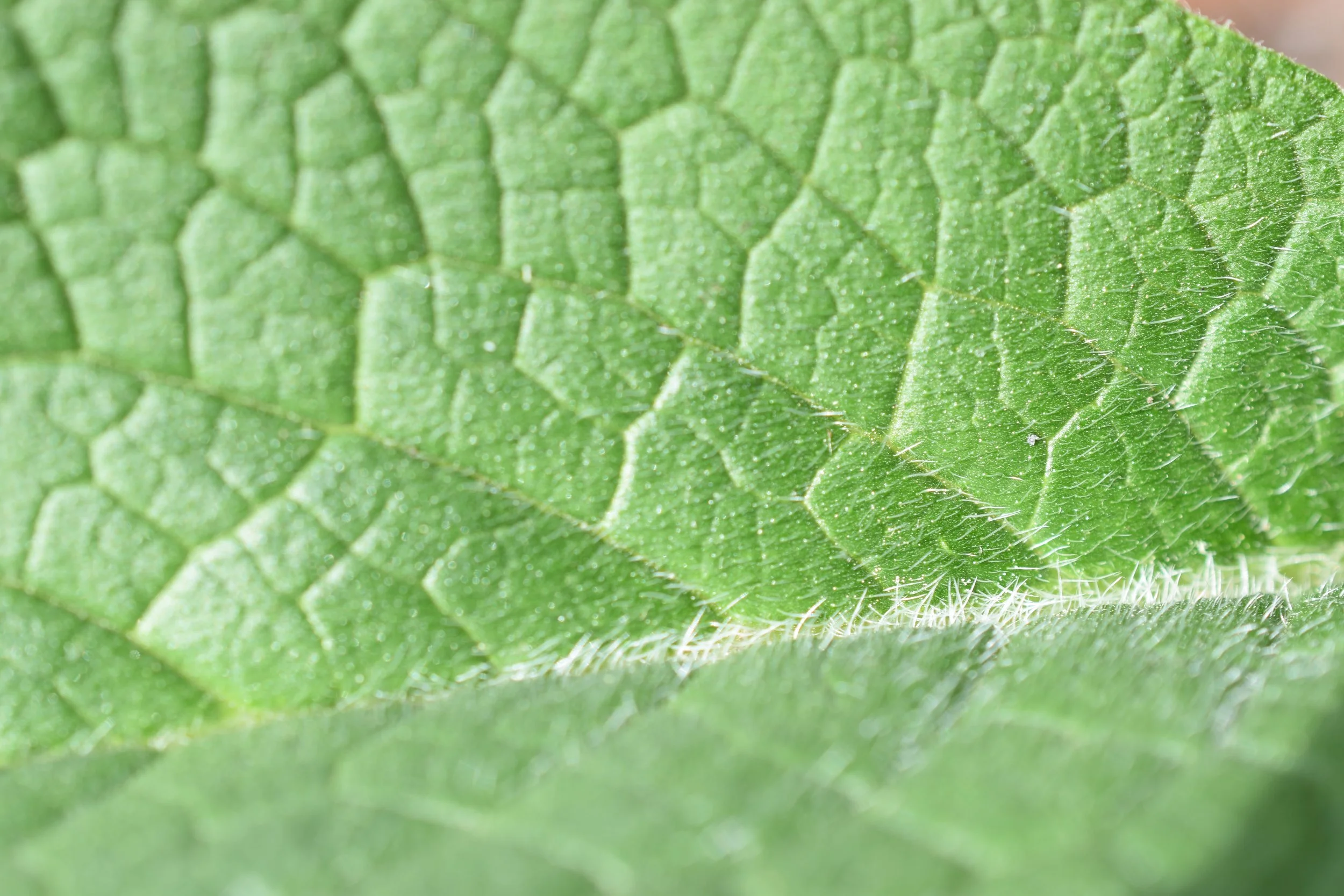
Notice the deep and well-defined veins, as well as the thick hairs that cover the entire aerial plant parts. The leaves are thick and rough to the touch.
Toxic Lookalikes
There are a few toxic lookalikes to Comfrey in the Great Lakes Region: Foxglove (Digitalis purpurea), Borage (Borago officinalis), and Lungwort (Pulmonaria spp.). However, most identification concerns can be easily quelled by comparing the flowers of Foxglove (one tall flower stalk with dangling flowers) and Borage (bright blue with petals that fan out); and by comparing the leaves of Lungwort (splattered with white spots).
When and How to Harvest
Comfrey grows best in sunny, open fields — pastures and back yards alike — and he grows like a weed , but from the roots underground. This makes him a sustainable plant to harvest in the wild! Harvest the aerial parts with garden shears or scissors all season long, but keep in mind that the older the plant is, the tougher the leaves and stems will be. It is recommended to wear gloves while handling Comfrey because of the thick hairs that like to lodge themselves in one’s skin. Harvest the roots in Spring before the flower stalks shoot up, or in Autumn after the flowers are spent.
Precautions
While Comfrey is completely safe to use topically, use with caution if administering internally — the entire plant contains pyrrolizidine alkaloids that have been associated with liver toxicity, especially when consumed for long periods of time. The roots contain more pyrrolizidine alkaloids than the aerial parts do. Do not consume at all during pregnancy, breastfeeding, with history of liver issues, or if cancer or tumors exist anywhere in the body.
Other Resources
Because the limited information above came from personal experience of one person, it is highly recommended that you continue learning from other trusted sources. Here are a few places to start!
Books
The Earthwise Herbal: A Complete Guide to Old World Medicinal Plants by Matthew Wood
Midwest Medicinal Plants: Identify, Harvest, and Use 109 Wild Herbs for Health and Wellness by Lisa M. Rose
Magic and Medicine of Plants by Reader’s Digest
American Herbal Products Association’s Botanical Safety Handbook
Encyclopedia of Herbal Medicine: 550 herbs and remedies for common ailments by Andrew Chevallier, FNIMH
Growing & Using Healing Herbs by Gaea and Shandor Weiss
500 Treatments for 100 Ailments: Integrated complementary and conventional medicine for the most common illnesses by Dr. Christine Gustafson, MD; Dr. Zhuoling Ren, TCMD; Beth MacEoin, MNCHM, RSHom; Dr. Geovanni Espinosa, ND, LAc, CNS, RH (AHG); Stephanie Caley, BSc (Hons) MNIMH
The Modern Herbal Dispensatory: A Medicine-making Guide by Thomas Easley and Steven Horne
Herbs for Pets: The natural way to enhance your pet’s life by Gregory L. Tilford and Mary L. Wulff
The Rodale Herb Book: How to Use, Grow, and Buy Nature’s Mircale Plants, an Organic Gardening and Farming Book
Websites & Videos
These statements and claims have not been evaluated by the Food and Drug Administration.
This information is not intended to diagnose, treat, cure, or prevent any disease. For educational purposes only.